Combine Multiple Images Into One: How to Get a Natural AI Result Online
AI Image Combiner Team
5/14/2026
Combine Multiple Images Into One: How to Get a Natural AI Result Online
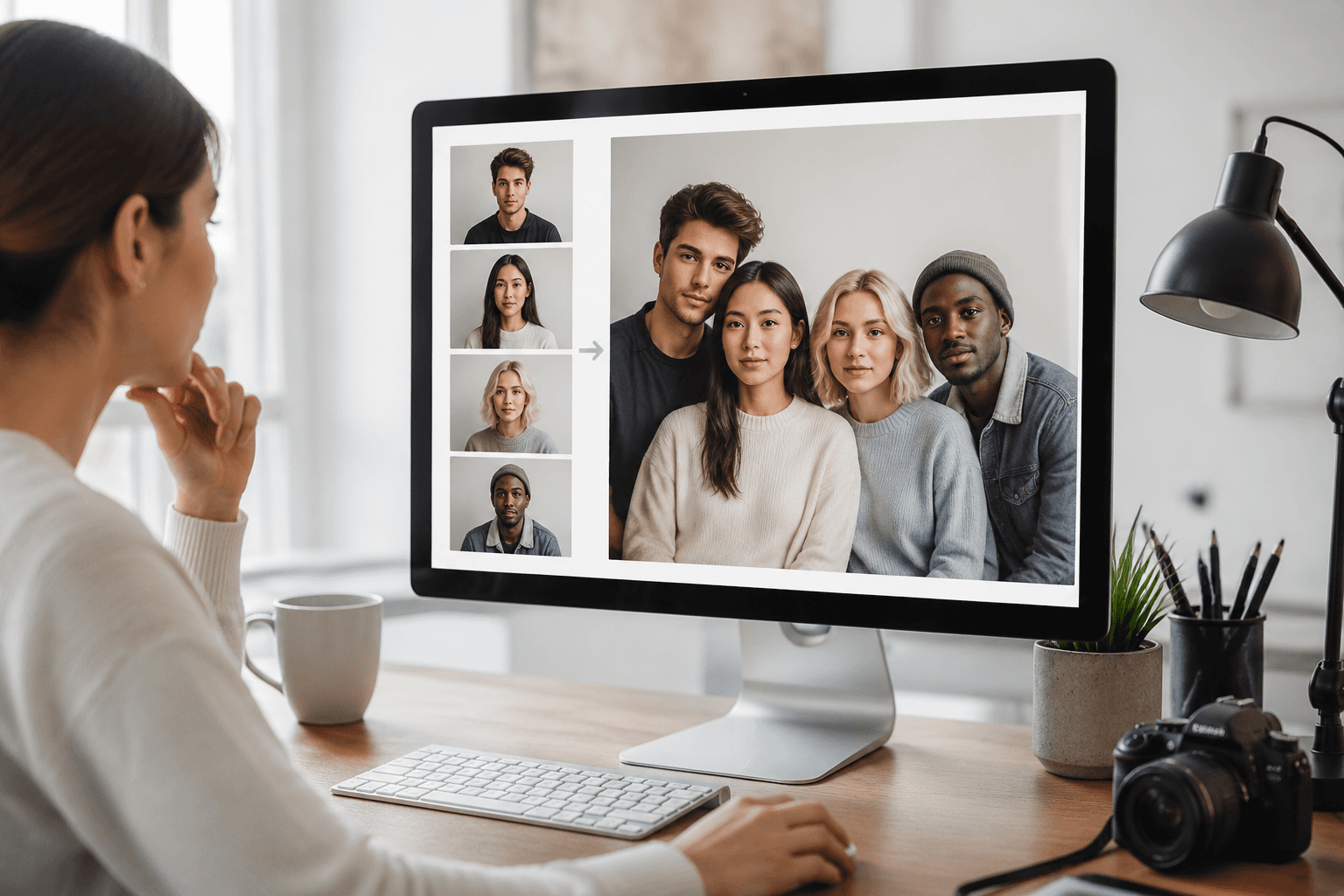
If you want to combine multiple images into one, you usually are not looking for a simple collage. You want one final image that feels coherent, natural, and visually unified. That is especially true when the source images contain different people, different lighting, or different backgrounds. This guide explains how to combine multiple images into one with AI, what affects the realism of the result, and why a dedicated workflow like AI Group Photo is often the most practical path when your goal is to merge several people into one believable group image.
The search intent behind this keyword is very clear. Users searching combine multiple images into one are usually trying to solve one of these problems:
- merge several people into one photo
- create a group photo from separate portraits
- combine different visual elements into one final composition
- save time compared with manual compositing
That is why this topic matters. The real problem is not only “put images together.” It is “make multiple images look like they belong together.”
Why users want to combine multiple images into one
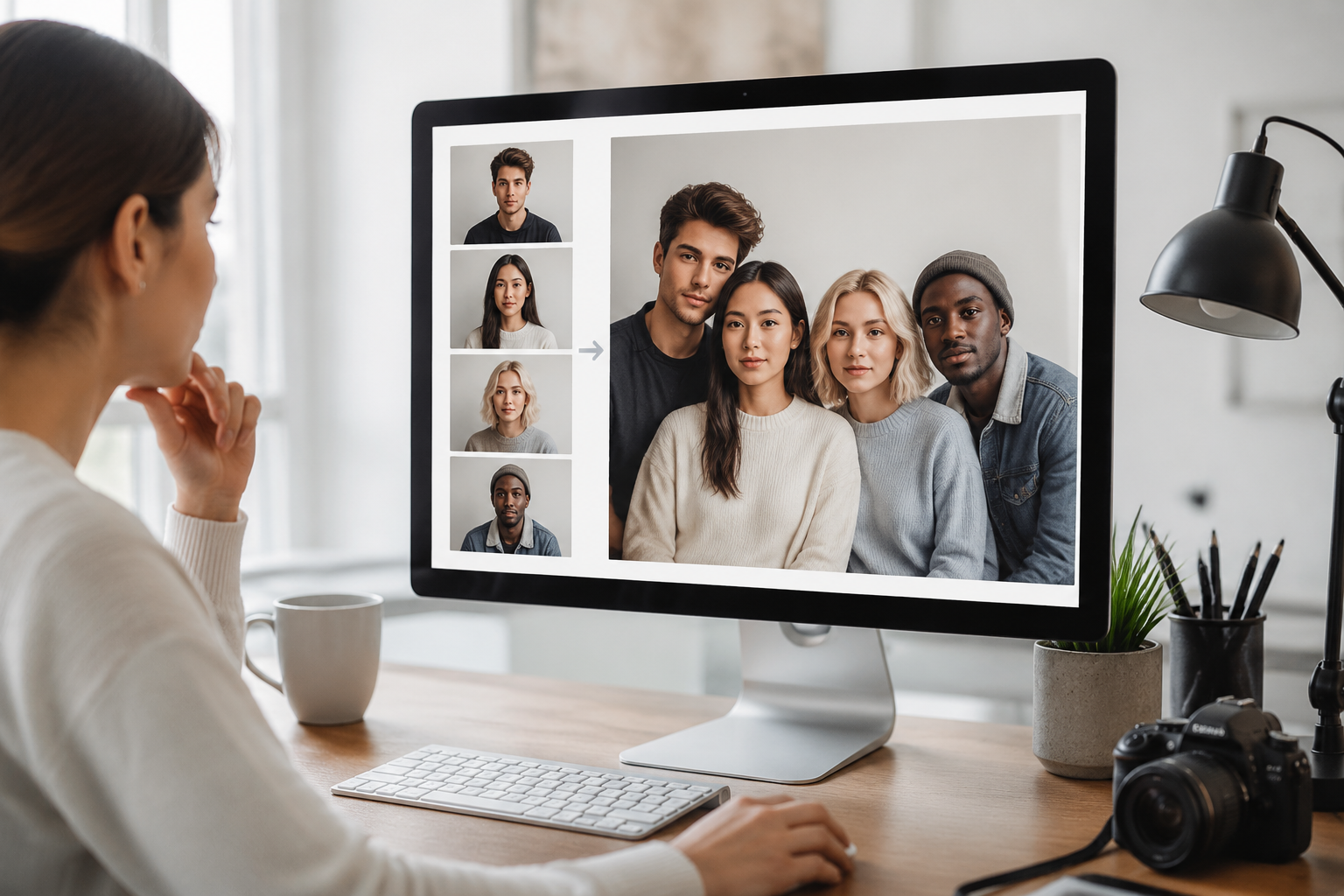
When someone searches combine multiple images into one, the need is usually practical rather than artistic.
Typical use cases include:
- putting family members into one image when they were photographed separately
- creating team or friend group photos from separate uploads
- combining product shots with supporting lifestyle elements
- merging several references into one concept visual
- building social media, invitation, or marketing visuals quickly
The important point is that combining multiple images is harder than combining only two. As the number of images grows, it becomes more difficult to keep:
- facial identity consistent
- body scale realistic
- lighting direction believable
- perspective aligned
- spacing natural
That is exactly where AI becomes more useful than older manual tools.
What makes combine multiple images into one difficult?
At first glance, the task sounds simple. Upload several images, generate one result, done. In practice, the quality of the final image depends on whether the model can unify many visual differences at once.
The biggest failure points are:
- one subject looks sharper than the others
- people appear at unrealistic scale
- skin tones or exposure do not match
- body posture looks cut-and-paste instead of photographed together
- the background does not fit everyone equally
This is why traditional collage-style tools are often not enough. They can place images together, but they do not naturally solve visual consistency.
How to combine multiple images into one with AI
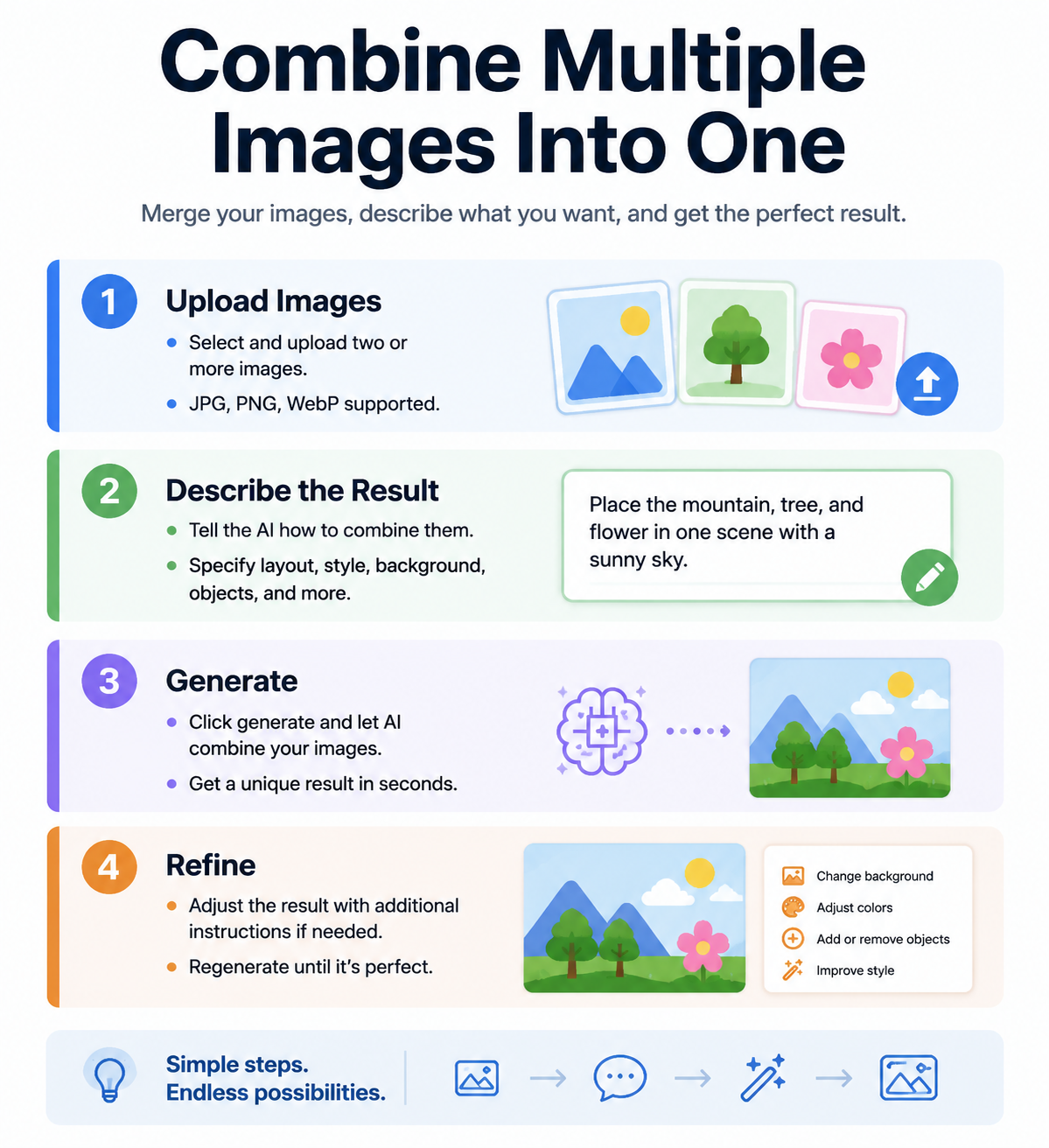
The most reliable workflow is not just “upload and hope.” You get better results when you treat the output as one scene with multiple subjects rather than as a pile of separate files.
Step 1: Choose clean source images
The AI works better when your source images are:
- clear and high enough in resolution
- not heavily compressed
- not blocked by objects or extreme crops
- relatively easy to isolate from the background
If one image is dark, another is backlit, and a third is low resolution, the merged result usually needs more correction.
Step 2: Decide what the final image should look like
Before generation, define the purpose of the output:
- a realistic group photo
- a polished event image
- a lifestyle composition
- a creative or editorial scene
This matters because “combine multiple images into one” is too vague as a prompt goal by itself. The AI performs better when you describe the scene you want everyone to appear inside.
Step 3: Explain how the subjects should relate to each other
The best prompts describe:
- who should appear
- where they should stand or sit
- what kind of scene they belong in
- what mood or visual style the image should have
For example, if your real goal is a believable group photo, a generic “combine all these images naturally” prompt is weaker than using a workflow designed for that exact problem, like AI Group Photo.
Why AI Group Photo is a strong fit for this keyword
Many users searching combine multiple images into one are actually trying to solve a people-merging problem, not just a general image-composition problem.
That is why AI Group Photo is a strong internal match for this article.
It is especially useful when you want to:
- merge several separate people into one scene
- create a realistic group photo from different uploads
- preserve visible identity while making everyone look naturally photographed together
- avoid the awkward look of manual cut-and-paste editing
This is a more specific and more conversion-relevant path than only pointing users to a broad homepage. The keyword says “combine multiple images into one,” but the user often really means “make multiple people appear in one believable image.” That is exactly the use case this tool is built for.
When combine multiple images into one means “make one group photo”
This is the most commercially relevant search intent in the cluster.
People often want to:
- put absent family members into one photo
- create a group portrait without a new photo shoot
- combine several selfies into one clean event image
- build a friend, team, or family photo from separate source images
For that kind of workflow, a specialized page like AI Group Photo is usually more useful than a generic merge tool because the real challenge is not just placing files together. It is making the final people arrangement feel natural.
What makes a combined image look natural?
If your goal is to combine multiple images into one successfully, the result should feel like one photograph or one intentional composition.
Strong results usually have:
- matching light direction
- coherent skin tones and exposure
- realistic spacing between people or objects
- consistent perspective
- a clear shared background
Weak results usually fail because:
- subjects are too close or too far apart
- body proportions do not match
- one image feels pasted on top of the others
- color temperature varies too much
- the scene logic is unclear
That is why better source images and a more specific workflow matter more than simply uploading more files.
Best use cases for combine multiple images into one
This keyword works well for several practical scenarios:
- group photos from separate portraits
- team or company visuals
- event mockups
- family tribute or celebration images
- social media collages that should look like one real scene
- editorial and marketing compositions built from multiple source assets
Among those, the most actionable use case for this site is still AI group photo creation, because it is specific, understandable, and closely tied to what users want fast.
Final answer
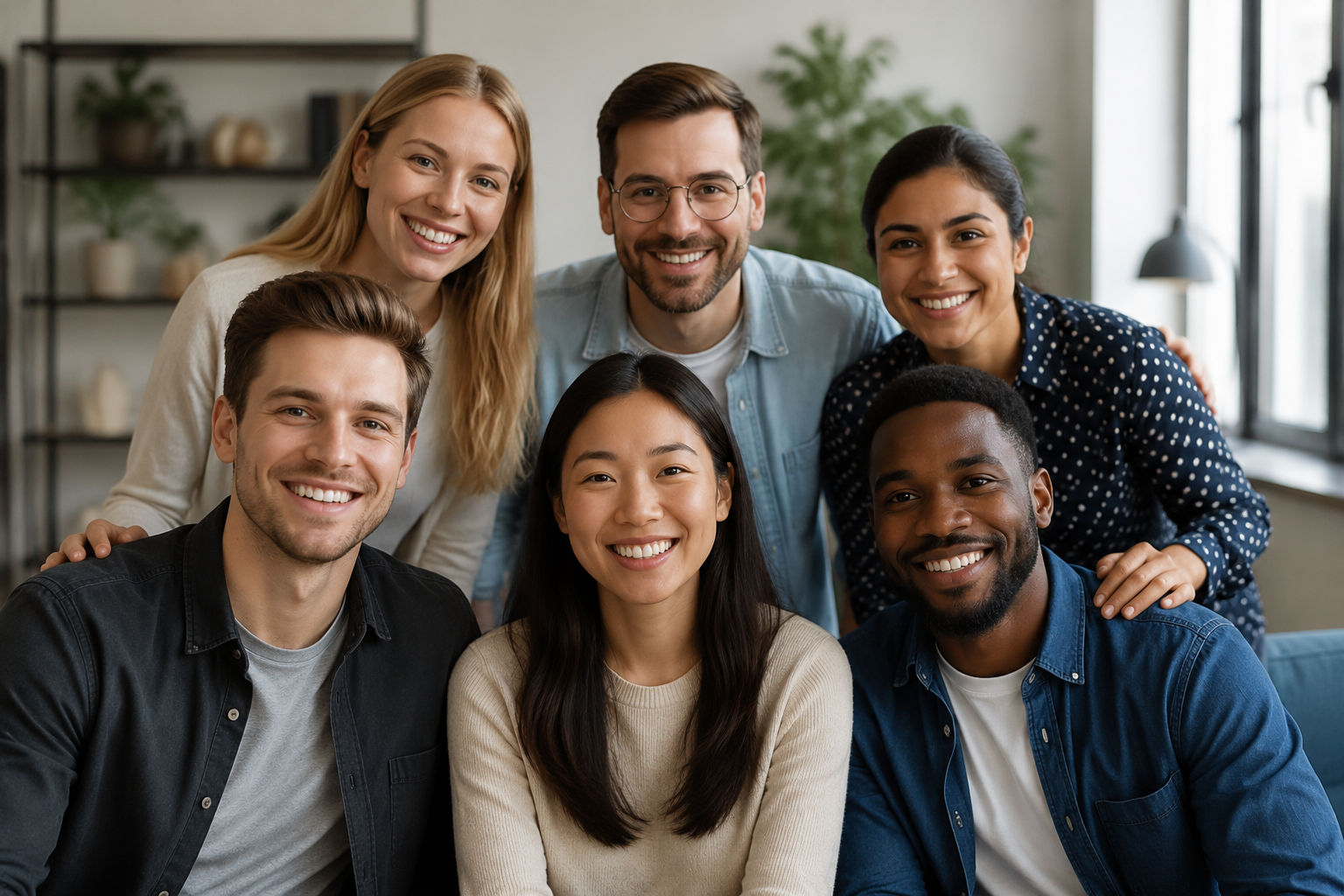
If you want to combine multiple images into one, the best AI workflow depends on what “one image” is supposed to become. If you only need a loose composition, many tools can do the job. But if you need the result to look natural, especially when several people are involved, you need more than stacking and masking.
The best results usually come from:
- cleaner source images
- a clearer final-scene goal
- a tool designed for realistic multi-person composition
That is why AI Group Photo is the most natural next step for many users searching this keyword. It turns the vague goal of “combine multiple images into one” into a much more useful workflow: merge several separate people into one believable final image.